
What is HYROX?
HYROX is a fitness race that's the same everywhere in the world: a 1 km run, then a workout station, eight times over. Because the format never changes, you can train for exactly what's coming.
The eight stations, in order: 1,000 m SkiErg, 50 m sled push, 50 m sled pull, 80 m burpee broad jumps, 1,000 m row, 200 m farmers carry, 100 m sandbag lunges and 100 wall balls.
You can race on your own (Open, or Pro with heavier weights), with a partner in Doubles, where you run together and split the station work, or in a team of four in the Relay.
Am I fit enough to start?
If you can walk into a class, you can start training for HYROX. Most people who race are everyday gym-goers, not elite athletes, and Doubles or a Relay is a great first race because you share the work.
In our HYROX classes every movement is scaled: lighter sleds, fewer reps or shorter distances until you're ready. First-timers train beside people chasing a podium, at their own level.
What to train
HYROX needs three things: an engine to keep running, the strength to move a sled and carry heavy things, and the skill of running well when your legs are already tired.
That means a mix of running and erg work, strength sessions for the legs and grip, and practice at the stations themselves so you learn pacing and efficient transitions.
A simple starting week
You don't need to train every day. A good first week at The STNDRD looks like this: HYROX Engine on Monday for aerobic capacity, a strength class such as Leg Day or Lower Day for the legs, and HYROX Training on Thursday for full station work.
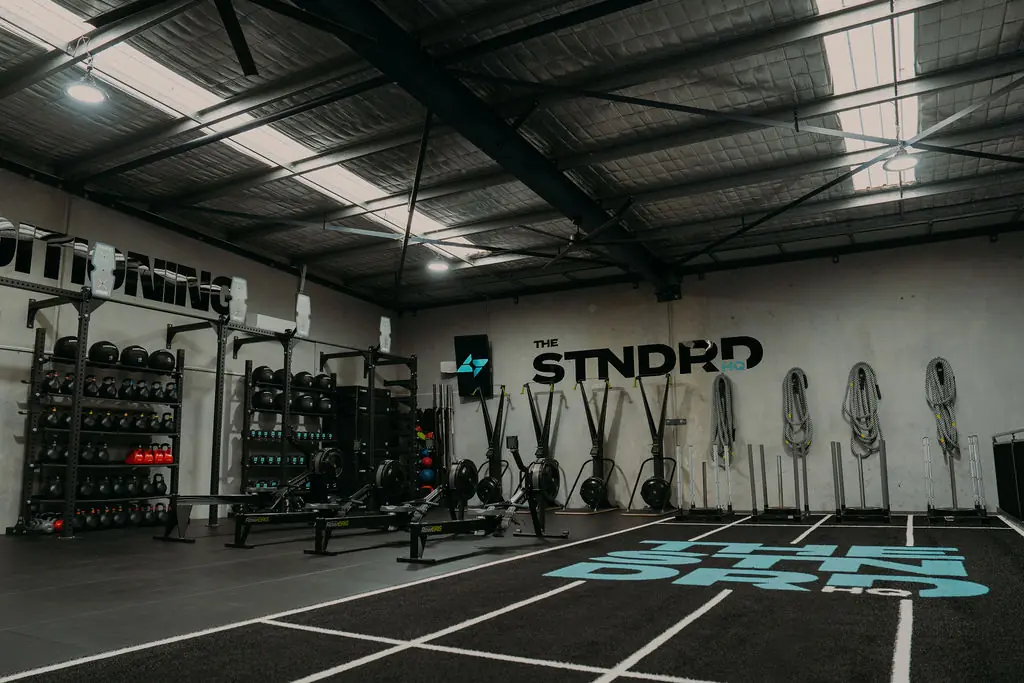
Add Cardio Conditioning on Friday when you're ready for a fourth session. Our conditioning floor is purpose-built for HYROX, with sled lanes, wall ball targets, SkiErgs, RowErgs and BikeErgs.
Picking your first race
Give yourself a few months of consistent training before your first race, so you can build up gradually and arrive confident. Tell your coach the date and they'll help you plan the final weeks.
In the week before, ease off the volume, keep some intensity and rehearse your transitions. On the day, pace the first runs and save something for the last stations.